Redesign and rebuild of Landonline

Landonline holds data about New Zealand's land and property transactions. It has 15,000 registered users, holds 2.4 million property titles, issues 281,000 property titles and allows 500,000 property searches per year.

After 20 years of service, the upgrade over six years brought improved security and a browser-based application, allowing greater access for all users. The project also took the opportunity to enhance the design and user experience, which led me to be their first UX Designer.

Read more about the Landonline project

1990s CRT computer on a desk with coffee Modern laptop on a desk with coffee
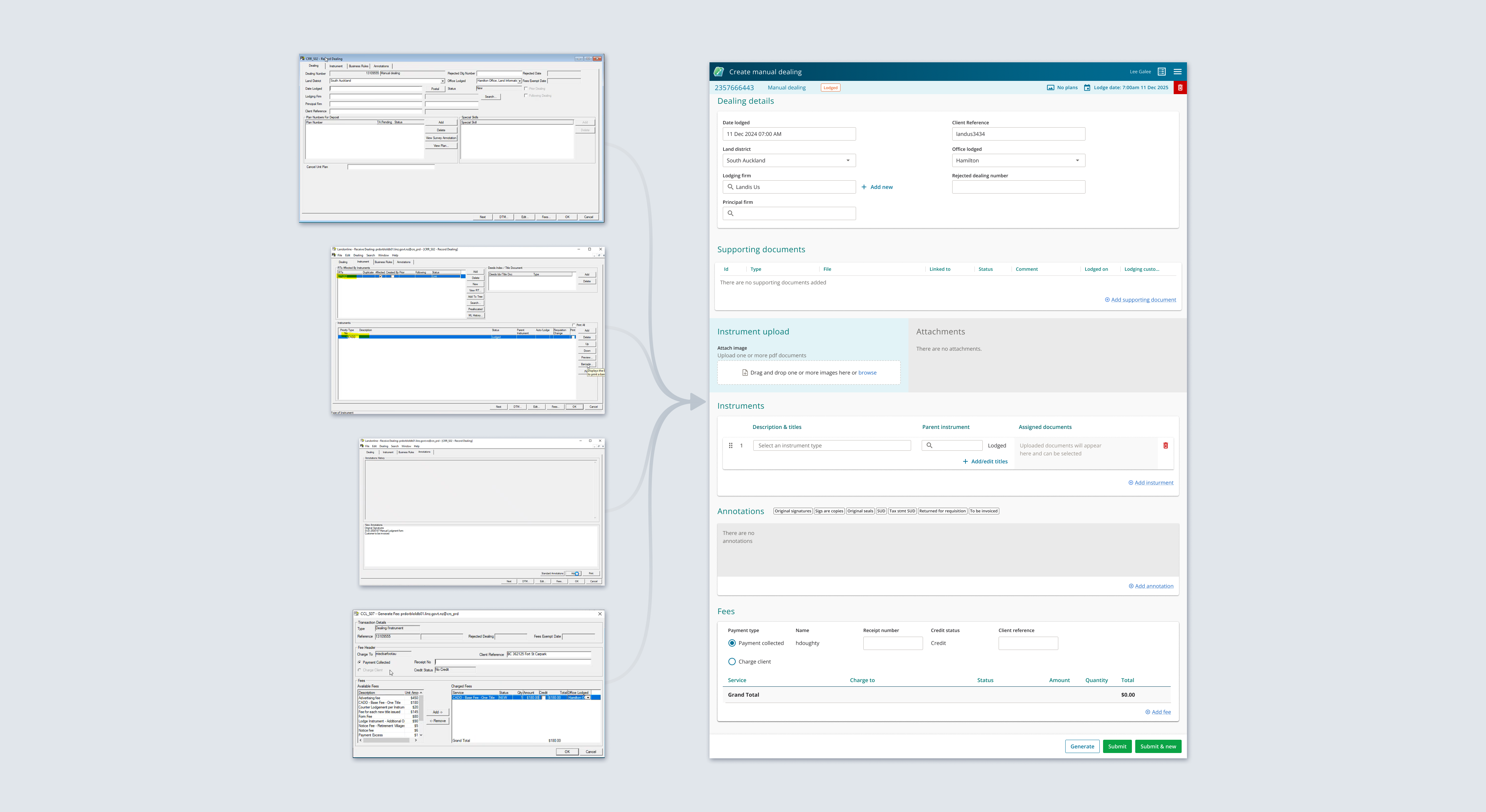
Taking an application designed in the late 1990s and applying human centred design and responsive layouts.

Rework complex, fragmented flows into more consolidated, compact views, designed to reduce the chance of errors. Allowing customers to progress through their workflow quicker and with confidence.

Re-envision the legacy system

I watched customers use the legacy app to gain an understanding of what they liked, where the pain points were and what they needed to achieve. I then sat with the BA's to get their take on the flows, what restrictions we had to account for and any edge cases not mentioned by the customers.

With this information I was able to design the views. As I went through each step I looked for ways to remove the need for validation by restricting selections based on the form state or by not allowing certain characters to be entered into fields. These would have a sanity check by representatives of the customer base and subject matter experts to ensure these changes wouldn't impact customers' needs.

The final outcome was a reduction in screens so customers had a better overview of the process they needed to follow and at what stage they were at when picking up work at a later date. Also reducing the ability to accidentally create errors in the forms reduced the workload on internal processing staff to deal with such avoidable tasks, which then led to both customers and staff saving time on rework.


Image of how multiple steps were combined into a single view so the user could retain context of their position in a flow

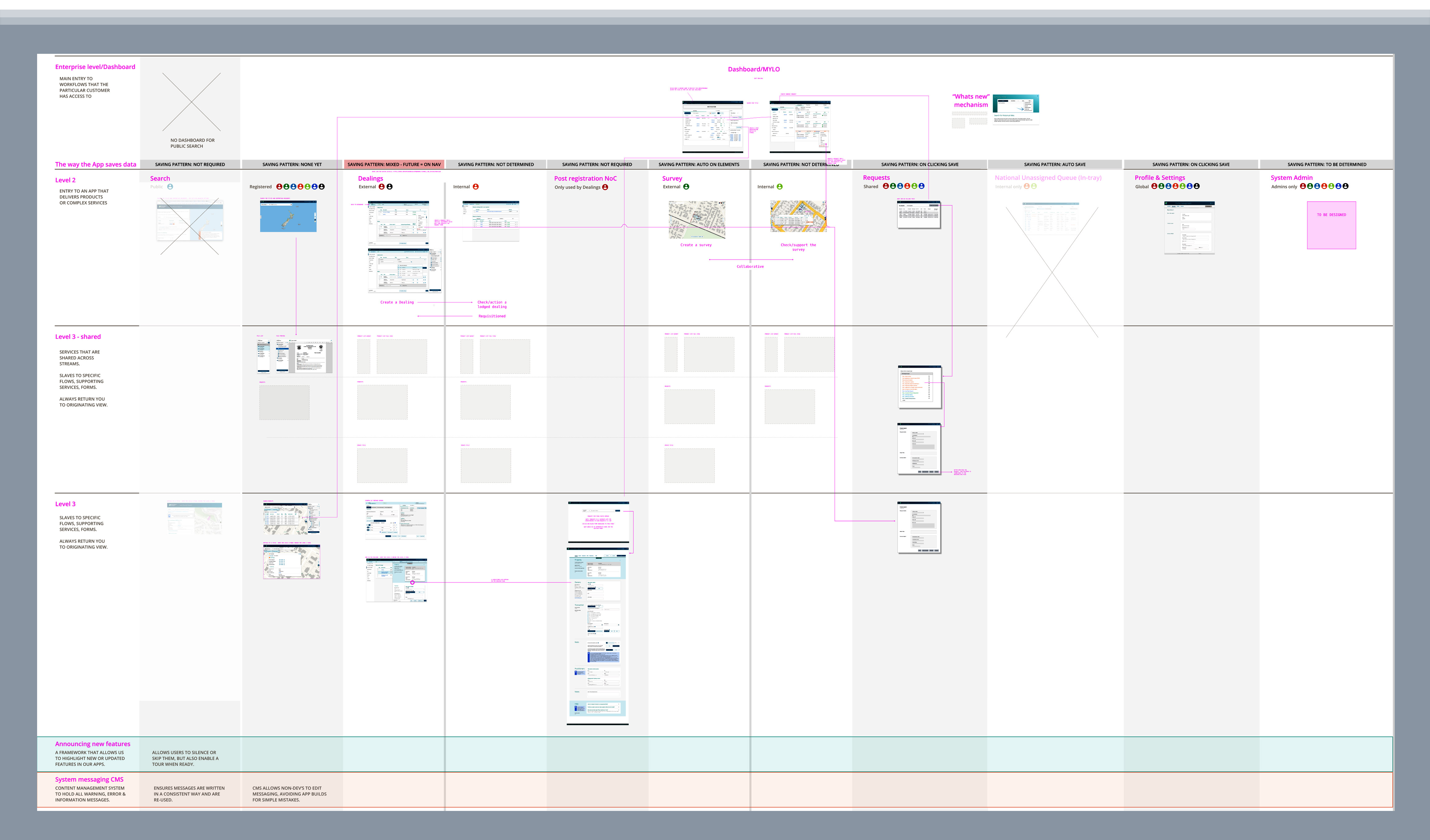
I needed to consider all the parts of an immensely complicated system of up to 50 separate Apps and communicate this to leadership and squads for greater understanding of what we were building.

Keeping it all together

Working with Architects, BA's and Lead Developers I was able to share my understanding of the current state and map out what we were building.

This bird's-eye view visualisation helped me to discover dependencies, common components and areas we hadn't looked into yet. It also helped squads and leaders to understand how we needed to avoid building silos and where duplications could be avoided.

Image of user flow with Westpac Pay
I mapped out the levels of pages and shared components within the Dealings space to help the project better understand the digital ecosystem we were building together and to break through mental silos.
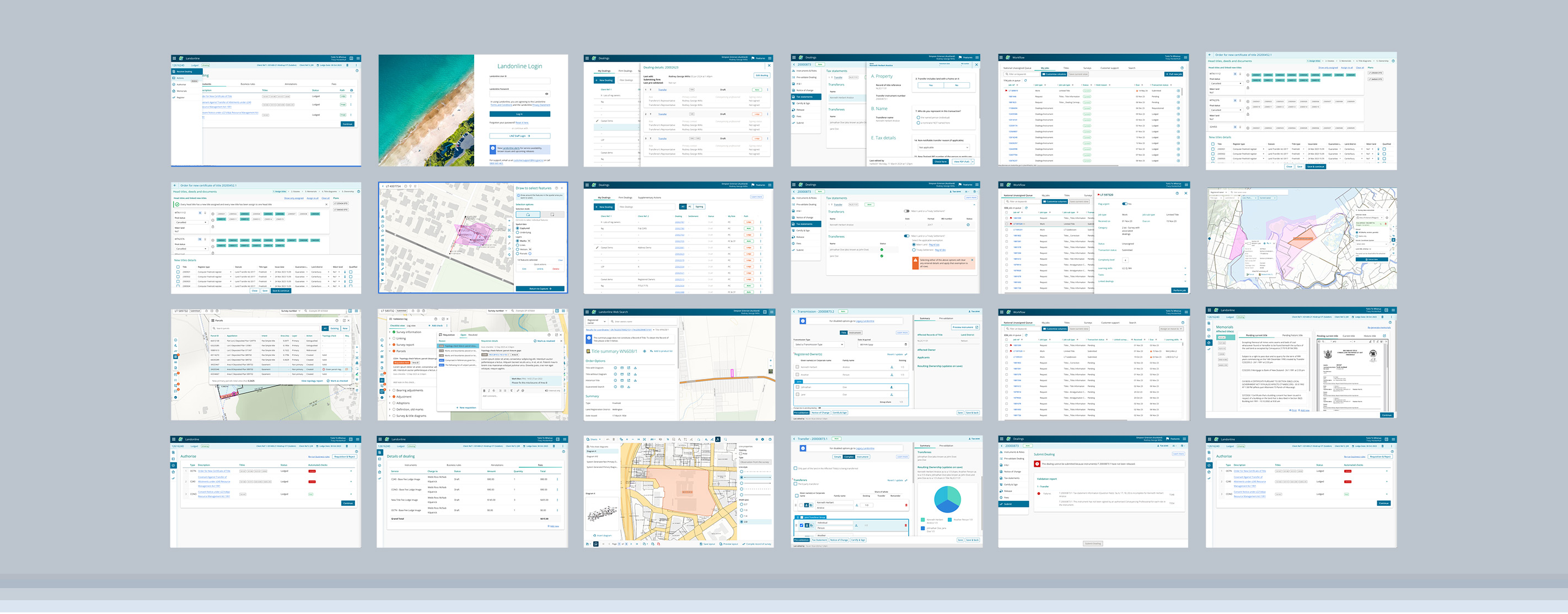
Just a taste of the hundreds of views that make up the Landonline application.

My role as Lead User Experience Designer

As Lead UX Designer on the STEP programme, I was responsible for shaping customer experience strategy, leading a high-performing design team, and ensuring design excellence across all touchpoints. My role combined hands-on design, leadership, and cross-functional collaboration to deliver meaningful, user-centred outcomes.

  • I led the design of innovative, high-quality customer experiences across STEP (Survey & Titles Enhancement Programme), including redesigning how customers interact with Landonline and LINZ.
  • Accountable for service design and delivery using agile principles, ensuring solutions aligned with the Design System, government standards, and WCAG 2 AA accessibility guidelines.
  • Co-create designs with customers.
  • Managed and supported a team of six Senior UX Designers while actively contributing within product squads.
  • Developed and matured the STEP design practice by applying human-centred design, design thinking, and scalable tools and processes.
  • Led customer research sessions to validate designs and understand how different users, from the general public to legal professionals and the Land Titles Committee, interact with Landonline.
  • Served as a steward of the design system, sharing best practices in Design and CSS with Communities of Practice.
  • Actively contributed to broader LINZ leadership activities to stay aligned with strategic priorities and direction.
  • Managed UX team hiring, performance, and capability building through coaching, mentoring, and development planning. Oversaw the team's transition from six to two as the programme moved from project to operational mode.

What did the customers say

  • 69% of users agree it's easier to use
  • 60% of users agree it's easier for new staff to learn
  • 50% of users experienced an increase in their productivity

The modernised New Landonline platform delivers a highly reliable and secure system that significantly improves property transaction workflows. Feedback from LINZ and legal professionals confirms that the upgrade boosts productivity, simplifies complex conveyancing tasks, and offers an intuitive, flexible user interface for everyday operations. Customer surveys were very positive with the following results: